top of page

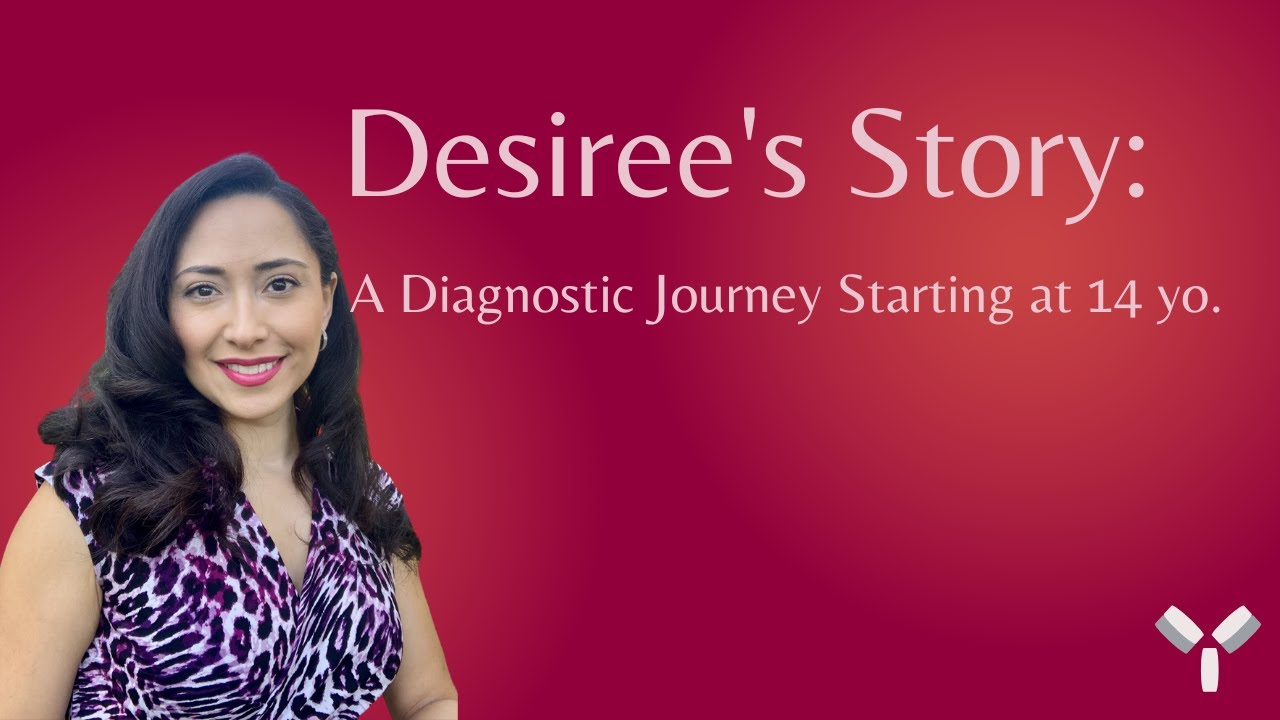
Desiree is a quadruple Autoimmune Warrior: rheumatoid arthritis, Hashimoto's disease, endometriosis, and fibromyalgia. Each condition complicated her diagnostic journey, which inspired her to become a certified functional health coach.


I've been diagnosed with rheumatoid arthritis, Hashimoto's disease, endometriosis, and fibromyalgia.


Since I was 14 years old, I suffered from joint pain but it wasn't until 2020 that I was diagnosed with Hashimoto's thyroiditis. And in 2021, I received the diagnosis of rheumatoid arthritis.


I spent many years suffering, taking Tylenol and ibuprofen, and going from doctor to doctor, just to be dismissed or told I have allergies. All the while, my symptoms got worse.


My diagnoses helped me realize that I was not the only one suffering in silence. I wanted to spread awareness about autoimmune diseases, so I became an ImYoo champion. Progress is impossible without change.


Listen to our interview with Desiree on her podcast, Stronger than Autoimmune.


Desiree Werland is a certified functional health coach. Learn more by visiting desireewerland.com or following her Instagram, @desiree_werland.


It took Ashley 6 years of pain to finally reach her rheumatoid arthritis diagnosis. Now she is a body builder, a fitness coach, and a #spoonieforscience


I started experiencing symptoms at age 21 and went to urgent care for treatment as I had no medical insurance. They told me to take Tylenol or Aleve and I did for 6 years.


When I was finally diagnosed, I had severe joint damage in my wrists. After a few failed medication attempts and a lupus diagnosis, my doc finally found something that worked.


I became a champion with ImYoo because I want to be a part of the change that I want to see for our spoonie community. Getting a diagnosis and finding the right medication shouldn’t take so long. The work that ImYoo is doing will change many lives.


Ashley Davis is a body builder and fitness coach. Learn more about her autoimmune-friendly fitness program, RA Warrior Fitness.


  • Emily Harari
  • Nov 10, 2022

How taking the wrong medication for your autoimmune condition could actually give you another autoimmune condition.


Finding the right autoimmune medication is already a challenging undertaking. For 43% of patients, methotrexate, a common first-line drug, makes no improvement to their autoimmune disease. No response to a drug can be discouraging, but much scarier and more dangerous is an adverse reaction.


We're all familiar with the laundry list of potential side effects rattled off at lightning speed in drug commercials or densely packed in pamphlets. We've heard so many of these side effects already: nausea, mood swings, the list goes on. But many are unfamiliar with autoimmunity as a side effect.


Starting a new drug, you're probably preoccupied with your own autoimmune condition. So developing another one, as a result of treatment no less, comes as a shock to many patients.


However, drug-induced autoimmunity is not all that uncommon. What's worse, it can go unnoticed, because the symptoms are often similar to the those of the pre-existing autoimmune condition you're trying to treat with the drug. an adverse reaction that gradually develops over months. It's often mild and reversible within a few months of stopping the medication, but the damage it's capable of causing can have lasting effects. Some cases can even be life-threatening.


Among the more-studied drug-induced autoimmune conditions is drug-induced lupus. It takes several months or years on a drug to develop, so if you've been taking the associated medications, keep an eye out for the symptoms, which can often be confused with the symptoms of your pre-existing autoimmune condition.


How common is drug-induced autoimmunity? For rheumatoid arthritis patients taking inflixumab in a clinical trial, less than 1% developed lupus-like symptoms. However, the reported rates vary significantly across medications and their dosages, some rates going as high as 20%. There are no significant differences in these reported rates between men and women.


While drug-induced lupus disappears within 6 months of stopping the medication, other drug-induced autoimmune conditions can be more persistent. Drug-induced psoriasis is one example of a recurring condition (i.e. when triggered by similar beta-blocker drugs). If you've ever discontinued a drug for this reason, it's important you share that with your doctor.


Listen to Jenni's story as an RA Warrior with autoimmune-induced psoriasis. She's living proof of how to bounce back from drug-induced autoimmunity.


The mechanisms of drug-induced autoimmunity are still poorly understood, though a few theories have been raised. With single-cell RNA sequencing, we hope to better understand patient-treatment matching for rheumatoid arthritis drugs, so stories like Jenni's are not repeated.


Support the RA study by sharing this article or contributing to the research today.


bottom of page